
Why PVD colored stainless steel for elevator cabs
Physical Vapour Deposition (PVD) deposits a thin, hard metallic coating onto a stainless steel base. Compared with wet painting or chemical colouring, PVD keeps the metal look, is more wear-resistant, and does not chip at folded edges when the coating is applied before fabrication. That is why it is the default choice for rose gold, champagne gold, black titanium and bronze elevator finishes.
The three decisions that matter
Specify these first and the rest of the order is straightforward:
- Base grade — 304 for normal interiors; 316L where cleaning chemicals or coastal humidity are present.
- Base surface — hairline (No.4) hides fingerprints best; mirror is dramatic but shows every mark.
- Colour and batch — approve a physical sample under the actual cab lighting, then keep every panel for one cab in the same production batch.
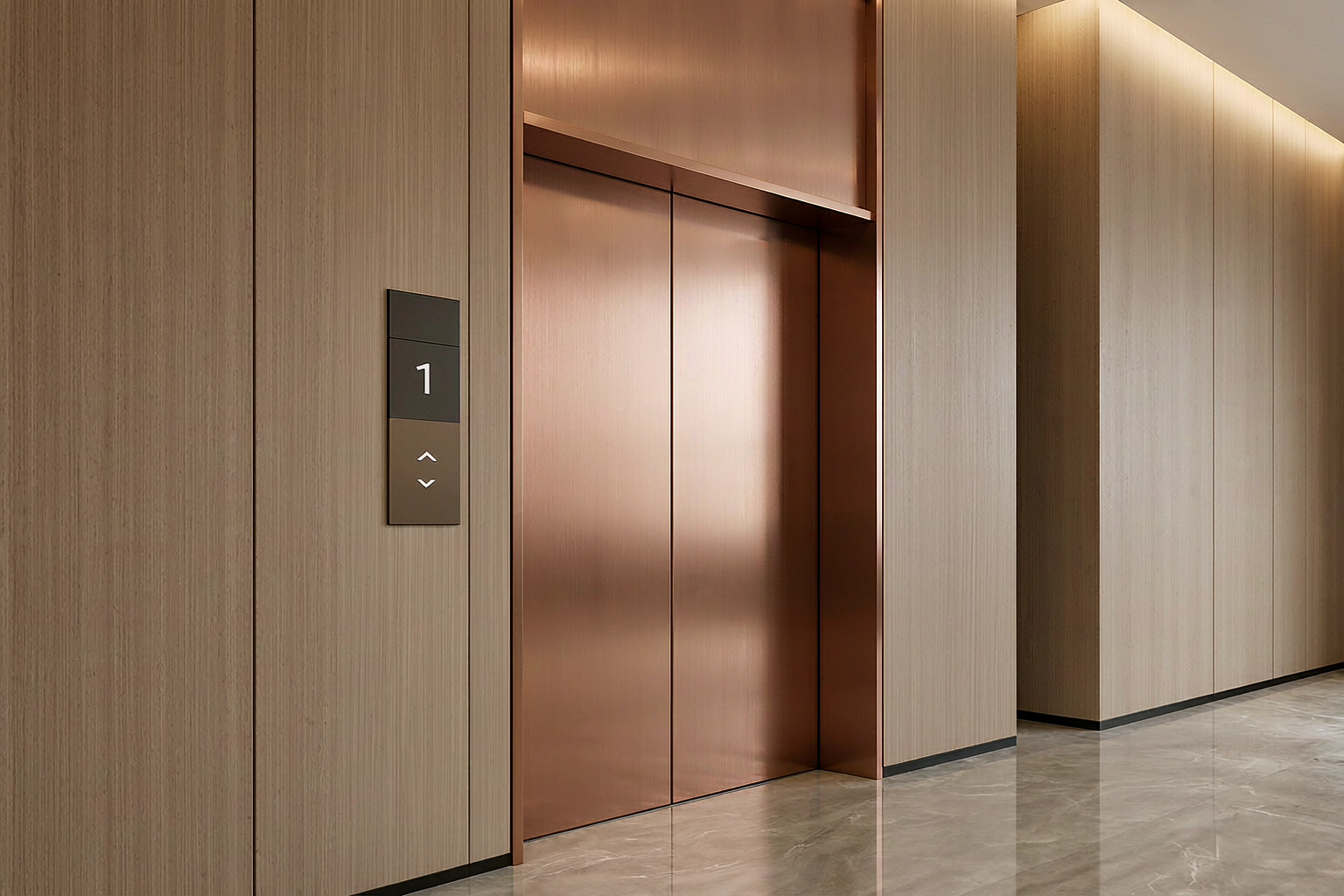
Typical specification range
These are common supply ranges, not a quotation. Confirm the final figures against your drawings and the approved sample.
| Parameter | Typical value / options |
|---|---|
| Base grade | 304 (standard), 316L (corrosive or coastal environments) |
| Thickness | 0.8–1.5 mm for cab wall and door panels |
| Sheet size | 1219 × 2438 mm; 1000 × 2000 mm; cut-to-size available |
| Base finish | Hairline No.4, satin, mirror No.8 |
| PVD colours | Rose gold, champagne gold, titanium black, bronze, copper, gunmetal |
| Fabrication | Shearing, CNC punching, bending, V-grooving, welding |
| Protective film | PE film during fabrication; removed after installation |
| Packing | Protective film, inner carton, export wooden crate |
Where colour problems come from
PVD colour is affected by viewing angle and light temperature. A panel that looks warm under showroom lighting can read pink or brown under cool elevator LEDs. The fix is not a different coating — it is controlling the conditions of approval and production.
1. Approving on a screen instead of a sample
Screens and PDF colour charts are not reliable for metallic finishes. Always approve a physical sample, ideally the full sheet size, under the same colour temperature as the installed cab.
2. Mixing production batches
Even with tight process control, two PVD batches can differ slightly. Keep all panels for one cab in a single batch and record the batch number on the packing list. Order replacement panels from the same batch reference when possible.
3. Fabrication after coating without care
Use sharp tools, protected surfaces and controlled V-groove depth. Contact with carbon steel tooling can contaminate the surface and create rust spots under the coating.
Frequently asked questions
Will PVD colour fade inside an elevator?
Indoor PVD finishes are stable under normal interior lighting and handling. The most common complaint is not fading but apparent colour shift caused by different light temperature or viewing angle. Approve the sample under the actual cab lighting.
Can PVD sheets be bent and V-grooved after coating?
Yes. PVD coatings are applied before fabrication and are thin enough to bend without flaking when tooling is clean and sharp. Protect the visible face and avoid carbon steel contact.
Which grade should I use for a hotel elevator?
304 is sufficient for most interior cabs. Choose 316L where strong cleaning chemicals, swimming-pool environments or coastal air will accelerate corrosion.
How do I match replacement panels months later?
Record the batch number from the original order and supply it with the repeat enquiry. Keeping spare panels from the original batch is the most reliable option.